


Page 37 - Demo
P. 37
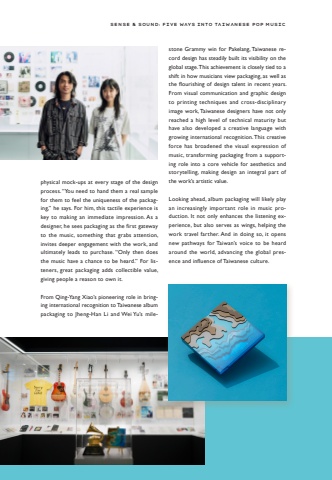
Sense & Sound: Five Ways into Taiwanese Pop Musicphysical mock-ups at every stage of the design process. %u201cYou need to hand them a real sample for them to feel the uniqueness of the packaging,%u201d he says. For him, this tactile experience is key to making an immediate impression. As a designer, he sees packaging as the first gateway to the music, something that grabs attention, invites deeper engagement with the work, and ultimately leads to purchase. %u201cOnly then does the music have a chance to be heard.%u201d For listeners, great packaging adds collectible value, giving people a reason to own it.From Qing-Yang Xiao%u2019s pioneering role in bringing international recognition to Taiwanese album packaging to Jheng-Han Li and Wei Yu%u2019s milestone Grammy win for Pakelang, Taiwanese record design has steadily built its visibility on the global stage. This achievement is closely tied to a shift in how musicians view packaging, as well as the flourishing of design talent in recent years. From visual communication and graphic design to printing techniques and cross-disciplinary image work, Taiwanese designers have not only reached a high level of technical maturity but have also developed a creative language with growing international recognition. This creative force has broadened the visual expression of music, transforming packaging from a supporting role into a core vehicle for aesthetics and storytelling, making design an integral part of the work%u2019s artistic value.Looking ahead, album packaging will likely play an increasingly important role in music production. It not only enhances the listening experience, but also serves as wings, helping the work travel farther. And in doing so, it opens new pathways for Taiwan%u2019s voice to be heard around the world, advancing the global presence and influence of Taiwanese culture.


