


Page 56 - Demo
P. 56
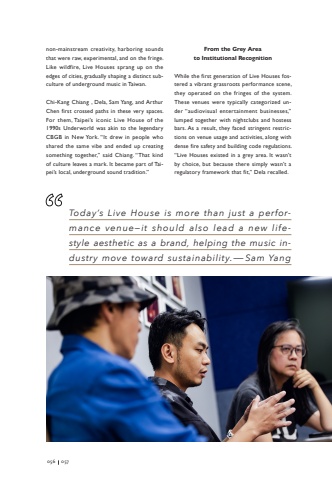
non-mainstream creativity, harboring sounds that were raw, experimental, and on the fringe. Like wildfire, Live Houses sprang up on the edges of cities, gradually shaping a distinct subculture of underground music in Taiwan.Chi-Kang Chiang , Dela, Sam Yang, and Arthur Chen first crossed paths in these very spaces. For them, Taipei%u2019s iconic Live House of the 1990s Underworld was akin to the legendary CBGB in New York. %u201cIt drew in people who shared the same vibe and ended up creating something together,%u201d said Chiang. %u201cThat kind of culture leaves a mark. It became part of Taipei%u2019s local, underground sound tradition.%u201dFrom the Grey Area to Institutional RecognitionWhile the first generation of Live Houses fostered a vibrant grassroots performance scene, they operated on the fringes of the system. These venues were typically categorized under %u201caudiovisual entertainment businesses,%u201d lumped together with nightclubs and hostess bars. As a result, they faced stringent restrictions on venue usage and activities, along with dense fire safety and building code regulations. %u201cLive Houses existed in a grey area. It wasn%u2019t by choice, but because there simply wasn%u2019t a regulatory framework that fit,%u201d Dela recalled.Today%u2019s Live House is more than just a performance venue%u2014it should also lead a new lifestyle aesthetic as a brand, helping the music industry move toward sustainability.%u2014Sam Yang056057


